
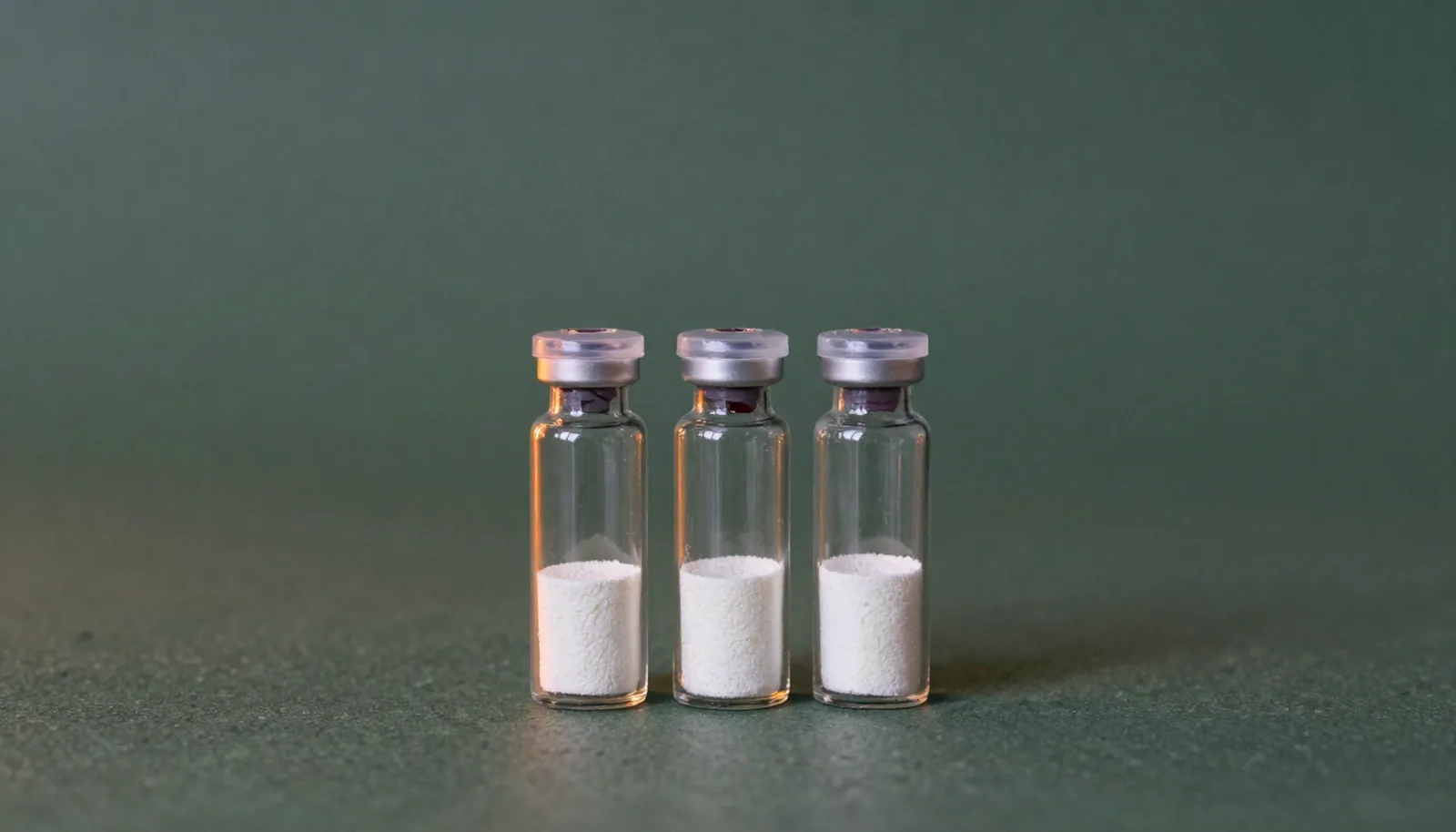
Do Peptides Need to Be Refrigerated? How to Store Research Peptides

Quick answer
Do peptides need to be refrigerated? Boreal ships freeze-dried powder at ambient temperature, not on ice. For long-term storage, a peer-reviewed consensus paper says lyophilized peptides keep best at -20 to -80 °C, which is a freezer range, not a fridge one. It also notes that some storage durations are peptide-dependent, so no single temperature is a promise for every compound. [1][3]
Key facts
- A peer-reviewed consensus paper on peptide standards says long-term storage (more than 6 months) is most effective when peptides are lyophilized (freeze-dried) and kept at -20 to -80 °C. [1]
- Before use, Hoofnagle and colleagues say, bring lyophilized powder to room temperature in a desiccator so it doesn’t take up water. [1]
- Some residues change over time. Cysteine, methionine and tryptophan are prone to oxidation, while glutamine and asparagine are prone to deamidation. [1]
- We found no storage statement for any compound in our shop from a regulator, a pharmacopoeia or a peer-reviewed paper, so you get the general rule here, not a per-compound table.
- We ship at ambient temperature, not on ice, and we don’t claim a cold chain. [3]
| At a glance | Summary |
|---|---|
| Main question | Do peptides need to be refrigerated? |
| Short answer | Long-term storage of lyophilized peptides: -20 to -80 °C, per a consensus paper. Parcel transit: we ship at ambient temperature. [1][3] |
| Covered here | All 30 research compounds in our shop, with our stock status on 12 November 2026 |
| Gaps | No compound-specific storage statement from a regulator, a pharmacopoeia or a peer-reviewed paper for any of the 30 |
| Our transit | Dispatch within 1 to 2 business days, then 2 to 4 business days in Canada, ambient [3] |
| Light and moisture | Warm a cold container to room temperature in a desiccator before use, and use dark tubes for light-sensitive sequences [1] |
Order for your research
Shipped from West Vancouver across Canada. Every result we hold is on the lab results page.

Retatrutide tested by Janoshik at 99.562% purity, batch GYC42DWH, with the assay reporting 9.99mg against a 10mg label.

BPC-157 is a synthetic pentadecapeptide, fifteen amino acids, originally isolated from human gastric juice.

GHK-Cu is a naturally occurring copper-binding tripeptide, glycyl-histidyl-lysine.
For laboratory research use only. Not for human or veterinary use.
Do peptides need to be refrigerated?
No. The source we found says freezer, not refrigerator, for long-term storage of lyophilized peptides, and Boreal ships powder at ambient temperature. Two cases matter for a sealed vial of freeze-dried powder.
Short term: Our shipping page says lyophilised powder is generally stable in transit at ambient temperature for a domestic parcel journey, so it ships that way. [3] We found no peer-reviewed study that tests a sealed peptide vial at ambient temperature for a set number of days, so we don’t state a number.
Long term: A 2016 consensus paper on peptide standards for mass spectrometry assays says long-term storage of peptides (more than 6 months) is most effective when they’re lyophilized and kept at -20 to -80 °C. [1] Its summary table lists “Lyophilized at -20 to -80 °C” for storage longer than a year. [1] That paper is about analytical standards. It’s general guidance on handling peptides, not a statement about any one vial we sell. It also describes extra vendor-supplied dry powder as stably stored at -20 °C or below until needed. [1]
So, plainly, this source doesn’t recommend a fridge for long-term powder storage. It recommends a freezer. It also flags some storage durations as peptide-dependent, so a general range isn’t a promise for every compound. [1]
Is there storage data for each compound we list?
No. We looked for a storage statement for each of the 30 compounds in our shop from a regulator, a pharmacopoeia or a peer-reviewed paper, and we didn’t find one for any of them. So we don’t print a per-compound table: it would only repeat “not stated” 30 times. Until a source exists, the general rule above is the best guide we can give. For anything specific to that vial, check the batch paperwork that ships with each order.
Fridge vs freezer for lyophilized peptides
Here’s what we could source on peptide storage.
- Freezer: -20 to -80 °C for lyophilized peptides kept long term, per the consensus paper. [1]
- Fridge: we found no source that gives a fridge temperature for sealed powder.
- Room temperature: our shipping page describes ambient temperature for parcel transit only, not for storage. [3]
Moisture runs through all of it. As Hoofnagle’s paper says, lyophilized powder should be brought to room temperature in a desiccator before use, to avoid water absorption in the unused peptide. [1] Cheng and colleagues add that high residual moisture can cause chemical degradation through hydrolysis in lyophilized protein drugs. [2]
For peptides in solution, Hoofnagle’s paper advises avoiding repeated freeze-thaw cycles. [1] No source we opened gives a freeze-thaw limit for sealed powder, so we don’t state one.
Light exposure is the other point, since aromatic residues are susceptible to photochemical degradation. Hoofnagle’s paper recommends amber or dark tubes for photosensitive sequences, but it says that about tubes holding peptide solutions. [1] We found no light statement for any compound we list, so we don’t give one.
Should peptides be shipped cold?
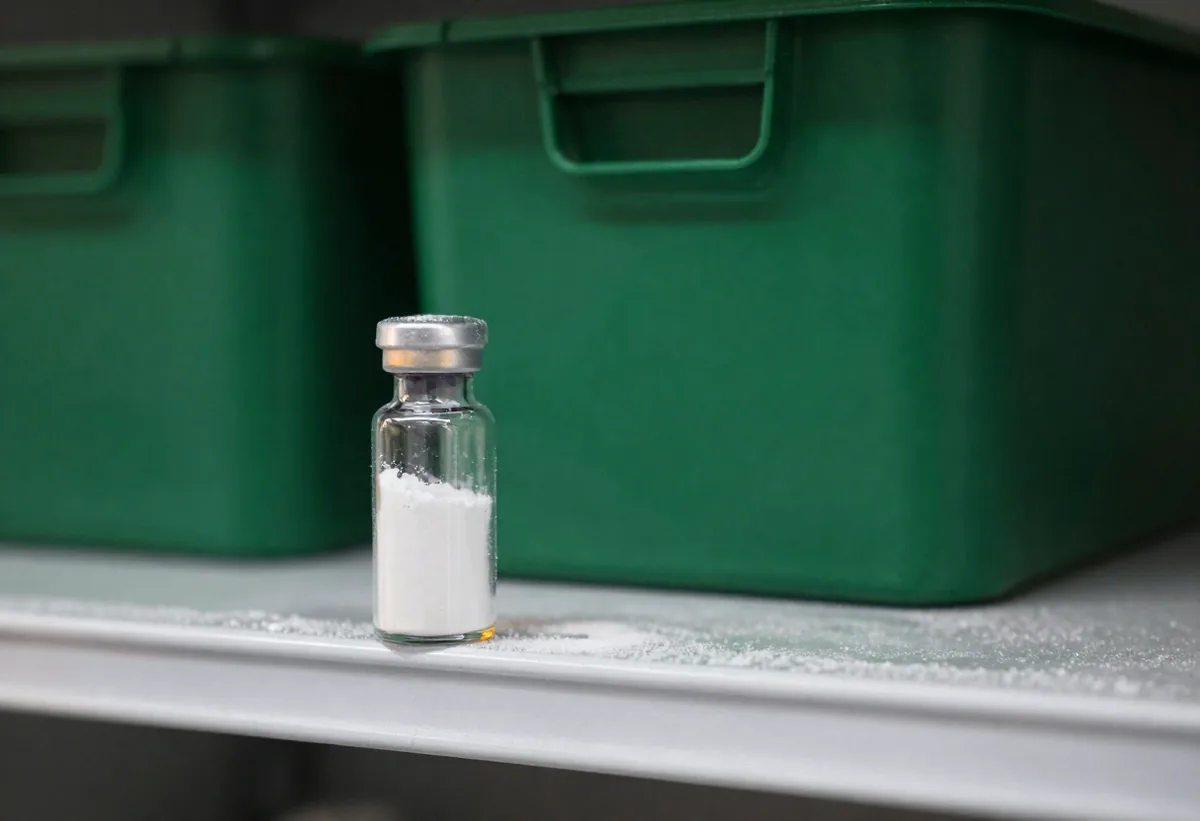
No. Our peptides aren’t shipped cold, because our shipping page says lyophilised powder is generally stable in transit at ambient temperature for the duration of a domestic parcel journey. [3] We found no peer-reviewed test of sealed peptide vials at ambient temperature for a set number of days, so we don’t claim one.
Here’s our transit time. We dispatch from West Vancouver within 1 to 2 business days, and delivery inside Canada then takes 2 to 4 business days. A carrier delay can add time, but every parcel is tracked. Nothing is refrigerated or iced during shipping, and we say we don’t run a cold chain. [3] Because the carrier depends on where the parcel is going, we don’t name one. [3]
We should be straight about one gap. Our carrier leg can run to 4 business days, and no source we opened tests a sealed peptide vial for that long at ambient temperature, so we make no claim either way.
When the parcel arrives, what you can do is simple. Check the vial is sealed and the packing slip batch reference matches your report. [3] Then keep it sealed and dry, and use the long-term range above if you’re storing it for months. Our shipping and delivery page has the full terms, and the guide to reading a peptide certificate of analysis (COA) shows how to match a batch to a report.
Why does my peptide vial look empty?
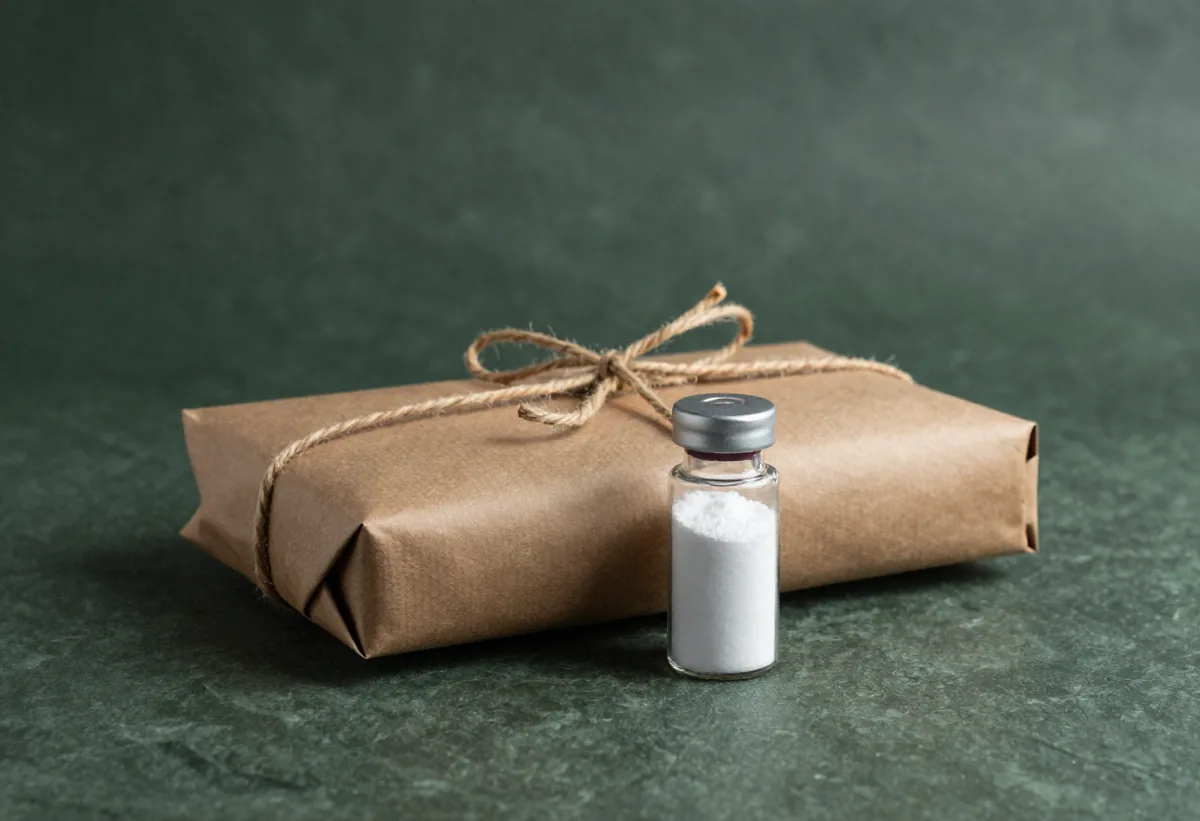
Although it can look almost empty, a freeze-dried vial can still be normal. Two facts explain most of it, and both come from sources we opened.
First, appearance depends on how the product was made. Cheng and colleagues say formulation influences cake appearance, and a cake collapses, losing its macroscopic structure, if it’s dried above its collapse temperature. [2] A research peptide with few other ingredients doesn’t have to form a tall, firm powder cake.
Second, what you see isn’t what the label says you have. Peptide content comes from a lab measurement, and a purity result applies to the tested lot. Our peptide COA guide explains what a high-performance liquid chromatography (HPLC) result does and doesn’t cover.
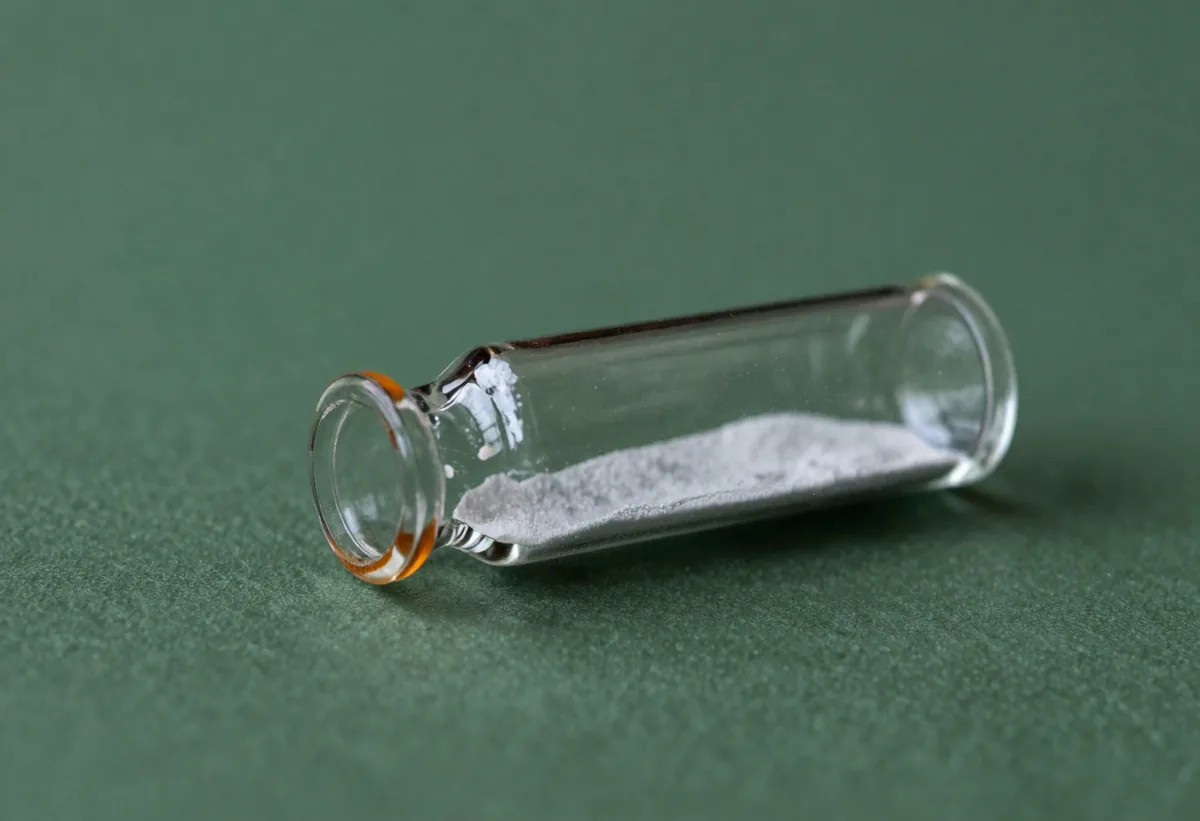
If a thin film or ring of dried powder sits on the glass, we found no source that ties it to damage. If you’re unsure, compare the batch reference on the packing slip with the report. If they don’t match, tell us at once. [3]
Signs a peptide has degraded
Looks can’t confirm purity, and we won’t pretend they can. What we can source is short.
- Wet powder. Hoofnagle’s paper says to bring lyophilized powder to room temperature in a desiccator to avoid water absorption. [1] Cheng’s review adds that high residual moisture can cause breakdown through hydrolysis. [2]
- A collapsed cake. Collapse means a loss of macroscopic structure. [2] It’s a manufacturing outcome, but it’s visible.
- Colour that doesn’t fit the compound. We found no source tying a colour change to a specific compound. Some products are coloured by design: GHK-Cu is a copper complex and looks blue, so blue powder isn’t a warning. Judge colour against the maker’s description.
- A batch that doesn’t match the report. This failure matters most, and only a lab result can check it.
If any of these apply, don’t use that vial for your work. Contact us with photos and the batch reference. We don’t treat appearance as a test.
Looking for a compound? Browse the in-stock research peptides and read each lab result first.
Status checked 12 November 2026
Product stock, strengths and the Boreal shipping statements were read from our live pages on this date, and 15 of the 30 research compounds were in stock. The paper statements were read from the Hoofnagle and Cheng papers on this date. Next review: February 2027, or sooner if a source changes.
Ready to order?
Shipped from West Vancouver across Canada. Every result we hold is on the lab results page.
Retatrutide tested by Janoshik at 99.562% purity, batch GYC42DWH, with the assay reporting 9.99mg against a 10mg label.
BPC-157 is a synthetic pentadecapeptide, fifteen amino acids, originally isolated from human gastric juice.
GHK-Cu is a naturally occurring copper-binding tripeptide, glycyl-histidyl-lysine.
For laboratory research use only. Not for human or veterinary use.
People also ask
Do peptides need to be refrigerated?
No. For long-term storage, a peer-reviewed consensus paper says lyophilized peptides keep best at -20 to -80 °C, which is a freezer range, and Boreal ships freeze-dried powder at ambient temperature, not on ice. We found no source that gives a fridge temperature for sealed powder. [1][3]
Read more: Do peptides need to be refrigerated?
How should peptides be stored?
For long-term storage, a consensus paper says to keep lyophilized peptides at -20 to -80 °C, and to bring a cold container to room temperature in a desiccator before use so the powder doesn’t absorb water. It also advises dark tubes for light-sensitive sequences. [1]
Read more: Fridge vs freezer for lyophilized peptides
How should BPC-157 be stored?
We found no storage statement for BPC-157 from a regulator or a peer-reviewed paper, so we don’t state one. The general guidance for lyophilized peptides is -20 to -80 °C for long-term storage. [1]
Which storage is most effective for lyophilized peptides, refrigerated or frozen?
For long-term storage of lyophilized peptides, the source we found says freezer, at -20 to -80 °C. We found no source that gives a fridge temperature for sealed powder. [1]
Read more: Fridge vs freezer for lyophilized peptides
What do the sources say about peptide powder at room temperature?
Our shipping page says lyophilised powder is generally stable in transit at ambient temperature for a domestic parcel journey. For storage over months, the consensus paper recommends -20 to -80 °C. [1][3]
Read more: Should peptides be shipped cold?
Should peptides be shipped cold?
No. Boreal doesn’t ship on ice or refrigerated and doesn’t run a cold chain. We dispatch within 1 to 2 business days, and delivery inside Canada takes 2 to 4 business days. We found no peer-reviewed test of a sealed vial at ambient temperature for that long, so we don’t claim a number. [3]
Read more: Should peptides be shipped cold?
Why does my peptide vial look empty?
A thin film or faint ring of dried powder can show up in a freeze-dried vial, and cake appearance depends on how the product was made. We found no source tying a thin film to damage. Appearance doesn’t show content, so match the batch reference to the lab report. [2][3]
Read more: Why does my peptide vial look empty?
Sources and methodology
We read the live Boreal product pages and the shipping page on November 12, 2026. For general storage guidance we used a peer-reviewed consensus paper on peptide handling and a peer-reviewed review of lyophilized drug products, and we opened every source listed below. We looked for compound-specific statements from regulators and papers and found none, so we didn’t guess one. We did not use other peptide sellers, forums or social media, and the guide contains no dosing information and makes no claim that any compound treats, prevents or improves any condition. Visit the Boreal Peptides homepage to see the full range.
How this guide was made: we researched and drafted it with AI assistance. We then checked every claim against its cited source, and the owner of Boreal Peptides reviewed it before publication.
Last reviewed: November 12, 2026. Next review: February 2027.
Research use only
Boreal Peptides supplies compounds for research. For laboratory research use only. Not for human or veterinary use. Nothing here is medical advice. Read our research use disclaimer.
Sources
- Hoofnagle AN, Whiteaker JR, Carr SA, et al. Recommendations for the Generation, Quantification, Storage, and Handling of Peptides Used for Mass Spectrometry-Based Assays. Clinical Chemistry, 2016;62:48-69. doi:10.1373/clinchem.2015.250563. https://pmc.ncbi.nlm.nih.gov/articles/PMC4830481/
- Cheng Y, Duong HTT, Hu Q, Shameem M, Tang XC. Practical advice in the development of a lyophilized protein drug product. Antibody Therapeutics. doi:10.1093/abt/tbae030. https://pmc.ncbi.nlm.nih.gov/articles/PMC11744310/
- Boreal Peptides. Shipping and delivery, sections Carrier and timing and Keeping it stable, read November 12, 2026. https://borealpeptides.com/shipping-and-delivery/