
Reconstitution Supplies & Accessories
Every lyophilised vial on this site arrives as dry powder, and none of it is usable without a diluent. That makes this the one category everything else depends on.
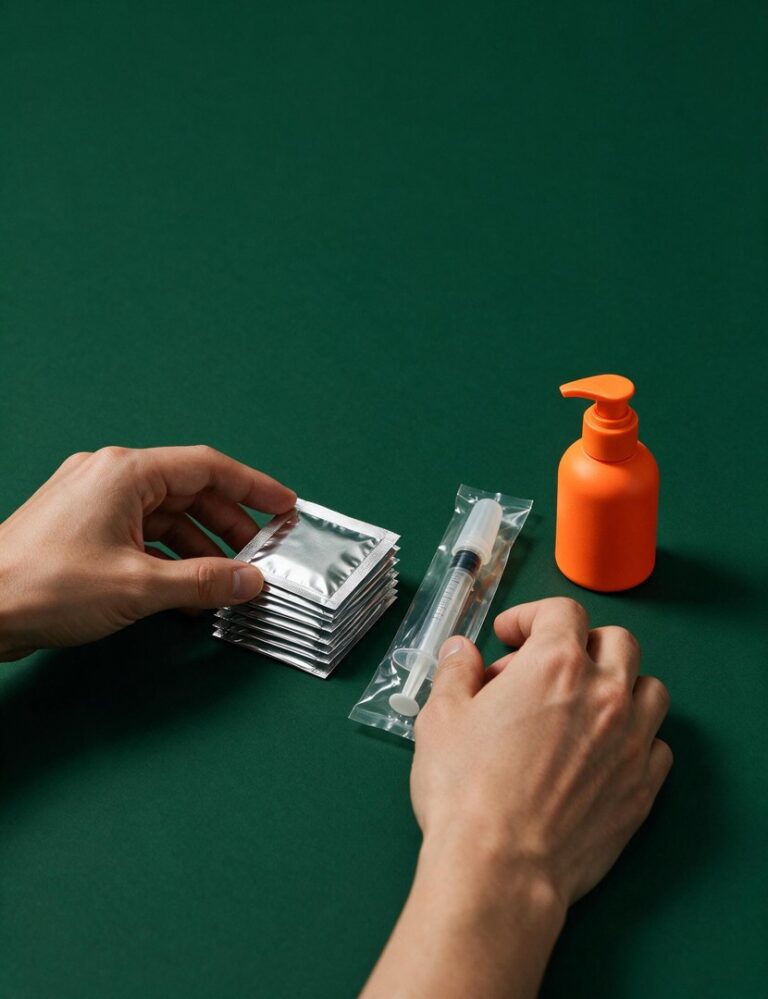
One product sits here: bacteriostatic water, in 3ml and 10ml. We don’t stock syringes, needles or any other accessory, and we’d rather say that than pad the shelf.
What bacteriostatic water is, and what it isn't
| Product | Bacteriostatic Water |
| Sizes | 3ml and 10ml |
| CAS | 7732-18-5, for the water itself1 |
| Purity figure | Not applicable. It's a sterile diluent, not a peptide. |
| Form | Sterile liquid |
There's no HPLC purity percentage on this page and there shouldn't be. Every other category here carries one because those products are peptides, and an assay tells you what fraction of the powder is the compound named on the label. A diluent isn't that kind of object. Any supplier quoting a purity percentage for water is quoting a number that answers no question you asked.
Bacteriostatic water versus sterile water
The difference comes down to one ingredient.
Sterile water has nothing added. It's water that has been sterilised, and once you pierce the stopper the contents are no longer protected. A vial reconstituted with it is intended for a single use.
Bacteriostatic water is sterile water containing a bacteriostatic agent, which inhibits bacterial growth inside the vial after the stopper has been pierced. That's the entire practical difference, and it's why bacteriostatic water is the default diluent for lyophilised material that won't be used all at once.
The agent is also the reason bacteriostatic water is not appropriate for every application. Some compounds and some protocols specifically exclude it. We're not going to tell you which category your work falls into.
Working out how much you need
This is arithmetic, not a recommendation. Reconstitution volume follows from two numbers: the total mass in the vial, and the concentration you're working to. Volume equals mass divided by concentration.
One thing worth flagging: for a blend, use the blend's total mass, not any single component's mass. KLOW is 80mg total, not 10mg of TB-500. Getting that wrong throws every subsequent number out by a factor of eight.
What we don't stock, and why we're saying so
No syringes, no needles, no alcohol swabs, no acetic acid diluent, no vial adapters. People come looking for those, and we'd rather say plainly that an accessories category here means one diluent than let the word imply a range we don't carry.
If you need a different diluent for a compound that doesn't dissolve in bacteriostatic water, that's a real requirement and we don't currently meet it.
Storage and shelf life
Sealed lyophilised powder keeps far longer than anything in solution. Reconstitution shortens usable life considerably, which is why every peptide on this site ships as dry powder and the diluent ships separately. That's also the practical argument for the 3ml size: a smaller diluent volume suits a vial you'll finish sooner.
Regulatory status in Canada
Everything on this site, including this diluent, is supplied for laboratory research use only. Health Canada regulates injectable peptides as drugs and has stated in writing that labelling one "for research use only" doesn't remove it from that regulation.2 Nothing here is approved for human or veterinary use, and we publish no dosing, no protocols and no stacks.
Buying bacteriostatic water in Canada
Bacteriostatic water ships across Canada in 3ml and 10ml, and it's in stock. Order it alongside whatever you're reconstituting rather than after, because the vial is useless on its own.
If you're reconstituting anything from healing and recovery research peptides or peptide blends and stacks, the same diluent applies. Every product in both is a lyophilised powder that needs one before it's anything at all.
Browse the full range, or contact us if you need a diluent we don't list.
Common questions
What is bacteriostatic water? Sterile water containing an agent that inhibits bacterial growth. That agent is what lets a reconstituted vial be used across more than one sitting instead of being discarded after the first.
How is it different from sterile water? Sterile water has nothing added and is intended for single use once opened. Bacteriostatic water contains the inhibiting agent. That's the whole difference.
Does bacteriostatic water have a purity figure? No, and it shouldn't. Purity percentages describe how much of a powder is the named compound. A diluent isn't a compound in that sense.
Which size should I buy? 3ml or 10ml, and the honest answer is that it depends on how much material you're reconstituting and how quickly. We won't guess for you. The 10ml is better value per millilitre; the 3ml suits a single vial you'll finish sooner.
Do you sell syringes or needles? No. Bacteriostatic water is the only product in this category.
Do you sell acetic acid water? Not at present. Some compounds don't dissolve properly in bacteriostatic water and need a different diluent. That's a real gap and we're not going to paper over it.
How long does a reconstituted vial last? Much less time than sealed dry powder. Reconstitution shortens usable life considerably, which is the reason the powder and the diluent ship separately.
Sources
- PubChem Compound Summary, CID 962, Water. https://pubchem.ncbi.nlm.nih.gov/compound/962
- Health Canada. "Think twice before injecting peptides bought online: unauthorized products can seriously harm your health." Advisory, 9 April 2026: "This type of labelling does not make these products legal or exempt from regulatory requirements." https://recalls-rappels.canada.ca/en/alert-recall/think-twice-injecting-peptides-bought-online-unauthorized-products-can-seriously-harm