
Healing & Recovery Research Peptides
All three compounds here carry a third-party certificate, and in each case the testing laboratory and the batch reference are named rather than implied. BPC-157’s 99.781% is the highest purity result anywhere in our lab set.
Recovery peptides are short amino acid chains studied in tissue-repair models. They aren’t a licensed drug class, they aren’t supplements, and none of them is approved for human use in Canada.
The evidence behind them is thinner than the marketing suggests, and the sections below say exactly how thin, compound by compound.
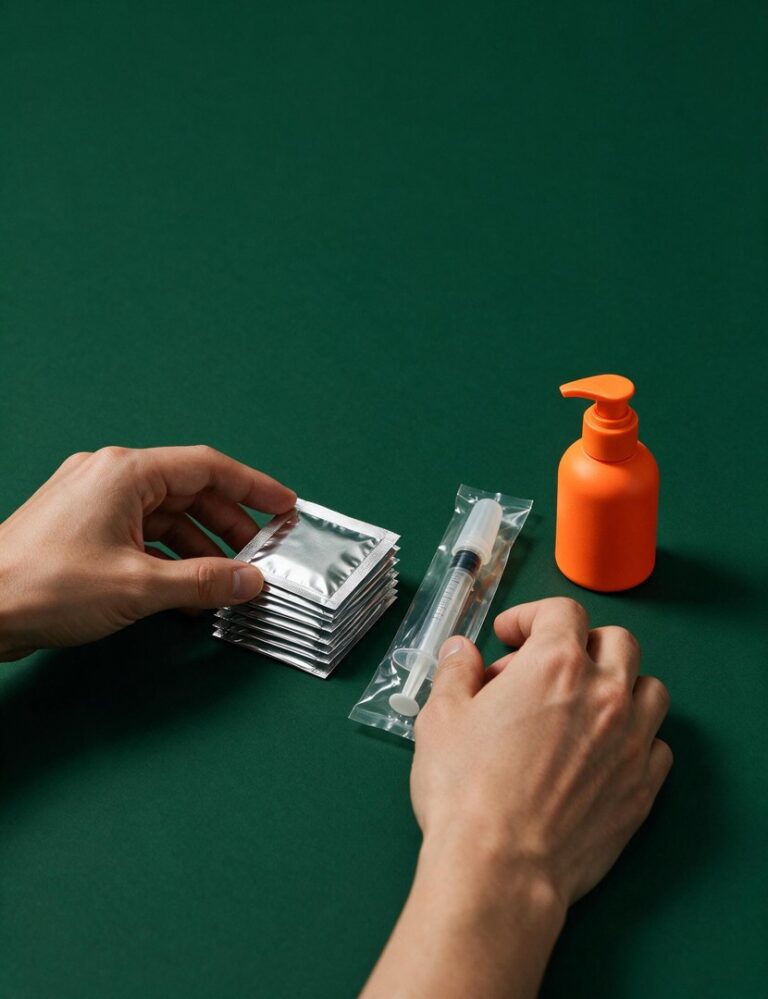
What's in this category, and what has been tested
| Compound | Identity | Purity | Laboratory | Batch |
|---|---|---|---|---|
| BPC-157 | Pentadecapeptide, 15 residues. CAS 137525-51-0, 1419.5 g/mol | 99.781% | Janoshik | GYC4CQSX |
| KPV | Tripeptide Lys-Pro-Val. CAS 67727-97-3, 342.43 g/mol | 99.44% | Medutest | WWB-KP10-4608 |
| TB-500 | Acetylated LKKTETQ, 7 residues. CAS 885340-08-9, 889.0 g/mol | 98.99% | Medutest | WWB-BT10-7694 |
Every figure above came from HPLC. An HPLC purity result covers identity and purity of the material in the tested lot. It does not measure sterility, endotoxin or heavy metals, and it describes that lot rather than everything sharing a label. We hold each report and send it on request.
The BPC-157 result came from Janoshik, whose reports carry a verification key, so that one can be checked independently rather than taken on our word.
TB-500 is not thymosin beta-4, and most listings get this wrong
This is worth more of your attention than any purity figure on the page.
TB-500 is a short synthetic fragment of thymosin beta-4, not the full protein. The sequence LKKTETQ corresponds to residues 17 to 23 of the parent protein,1 and the commercial material is that seven-residue peptide in acetylated form. PubChem's structural record resolves to exactly that.2
A great many listings describe TB-500 as a seventeen-amino-acid fragment. That confuses residue positions with residue count. It's seven residues, sitting at positions 17 to 23. If a supplier can't get that right on the one compound they're selling you, it tells you something about the rest of their page.
What the research actually says, compound by compound
BPC-157 is a synthetic pentadecapeptide, a chain of fifteen amino acids, originally isolated from human gastric juice. It's the most searched research peptide in Canada by a wide margin, at roughly 27,100 searches a month.
That popularity is not matched by the evidence. A 2025 narrative review of BPC-157 for musculoskeletal healing describes the human evidence as "exceedingly sparse" and identifies only three published human studies.3 There's a substantial animal literature and an almost absent human one. If you're designing a research model, that asymmetry is more useful to know than any purity figure on this page.
KPV is a tripeptide: lysine, proline, valine. It's the C-terminal sequence of alpha-melanocyte stimulating hormone, which makes it a fragment of a much larger signalling molecule rather than a compound in its own right. A 2007 study in Gastroenterology examined PepT1-mediated uptake of the tripeptide and reduced intestinal inflammation in a laboratory model.4 That's a cell and animal finding about a transport mechanism, not a result in people.
TB-500 work centres on actin. The parent protein, thymosin beta-4, induces a conformational change in actin monomers,1 which is the mechanism the literature keeps returning to. Note that this research is on the full protein, and TB-500 is a seven-residue fragment of it. Those aren't the same object, and treating findings about one as findings about the other is the single most common error in this category.
We publish no dosing, no protocols and no stacks for any of the three.
Regulatory status in Canada
Health Canada regulates injectable peptides as drugs and has stated in writing that labelling one "for research use only" doesn't remove it from that regulation.5 Every compound on this page is supplied for laboratory research use only, and nothing here is approved for human or veterinary use.
Research use labelling is often presented as though it settles the legal question. On the regulator's own published statements, it doesn't. We'd rather say that plainly than let you find out later.
Buying recovery peptides in Canada
All three ship as single lyophilised vials, anywhere in Canada, and all three are in stock today. BPC-157 comes in 2mg, 5mg and 10mg, TB-500 in 2mg, 5mg and 10mg, and KPV in two strengths. Each is reconstituted with bacteriostatic water, which we stock separately.
Compare on price per milligram rather than price per vial, because strengths differ between suppliers and a cheaper vial is often a smaller one. When you order, the batch reference travels on the packing slip, so the report we hold is the report for the vial you open.
BPC-157 and TB-500 are the two most commonly paired compounds in this field. Buying them separately gives you control over the ratio. If you'd rather have them in one vial, they both appear inside the blends in peptide blends and stacks, and KPV is the single compound that separates the KLOW blend from GLOW.
Browse the full range, or contact us with a compound name to ask for a certificate before you buy.
Common questions
What are recovery peptides? Short chains of amino acids joined by peptide bonds, studied in tissue-repair and wound-healing models. The three here are 3, 7 and 15 residues long, which is tiny next to a protein. They're biologically active peptides rather than a licensed drug class, and they aren't supplements. Healing peptides, repair peptides and regenerative peptides all name the same rough group, and none of those labels is a claim about what happens in a person.
Which of these has a certificate of analysis? All three. BPC-157 at 99.781% with Janoshik, KPV at 99.44% with Medutest, TB-500 at 98.99% with Medutest. Each certificate names the batch, and we send the report on request. The BPC-157 figure is the highest result across every compound we've had assayed.
What's the difference between TB-500 and thymosin beta-4? Length. Thymosin beta-4 is the full protein. TB-500 is a seven-residue fragment of it, positions 17 to 23, in acetylated form. Research on the protein is not automatically research on the fragment.
Why do BPC-157 and TB-500 get bought together? Because that pairing is a convention in the field, not because we've seen evidence that the combination does anything the compounds don't do separately. We stock both singly and inside blends, and we won't tell you which to choose.
Are recovery peptides safe? No safety profile has been established for any compound in this category, and a purity assay isn't a safety assessment. An HPLC result covers identity and purity in one lot. It doesn't measure sterility, endotoxin or heavy metals. We're not going to point you at safety guidelines that don't exist.
Are they legal in Canada? Health Canada regulates injectable peptides as drugs, and research use labelling doesn't change that. In practice that means nothing here is approved for use in a person, we won't supply dosing, and buying a vial doesn't make its use lawful.
How long does reconstituted material last? Much less time than sealed lyophilised powder. Reconstitution shortens the usable life considerably, which is why the vials ship as dry powder rather than in solution.
Sources
- Dedova IV, Nikolaeva OP, Safer D, De La Cruz EM, dos Remedios CG. "Thymosin beta4 induces a conformational change in actin monomers." Biophysical Journal, 2006. doi:10.1529/biophysj.105.063081. https://pmc.ncbi.nlm.nih.gov/articles/PMC1367123/
- PubChem Compound Summary, CID 62707662, TB-500. https://pubchem.ncbi.nlm.nih.gov/compound/62707662
- McGuire FP, Martinez R, Lenz A, Skinner L, Cushman DM. "Regeneration or Risk? A Narrative Review of BPC-157 for Musculoskeletal Healing." Current Reviews in Musculoskeletal Medicine, 2025;18(12):611-619. https://pmc.ncbi.nlm.nih.gov/articles/PMC12446177/
- Dalmasso G, Charrier-Hisamuddin L, Nguyen HTT, Yan Y, Sitaraman S, Merlin D. "PepT1-Mediated Tripeptide KPV Uptake Reduces Intestinal Inflammation." Gastroenterology, 2007;134(1):166-178. https://pmc.ncbi.nlm.nih.gov/articles/PMC2431115/
- Health Canada. "Think twice before injecting peptides bought online: unauthorized products can seriously harm your health." Advisory, 9 April 2026: "This type of labelling does not make these products legal or exempt from regulatory requirements." https://recalls-rappels.canada.ca/en/alert-recall/think-twice-injecting-peptides-bought-online-unauthorized-products-can-seriously-harm